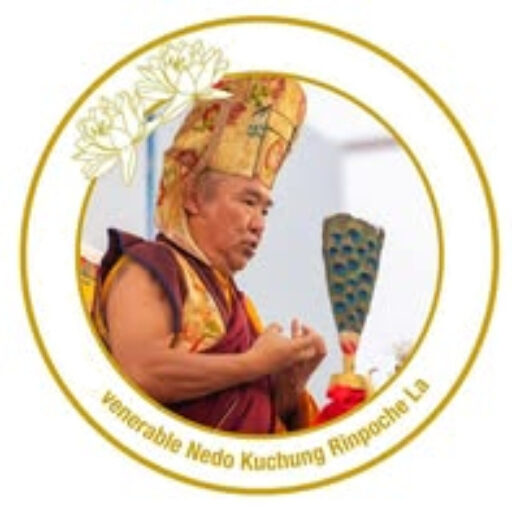
The Nedo lineage is a distinct and profound tradition within Tibetan Buddhism, particularly known for its unique synthesis of the Karma Kagyu and Nyingma schools. Its origins trace back to the 17th-century Mahasiddha Karma Chagme Rinpoche, a highly accomplished master who held both the core Dharma lineage of Neydo (primarily Kagyu) and the Dharma lineage of Palyul Dzogchen (primarily Nyingma).
Key aspects of the Nedo lineage include:
Founder:
Mahasiddha Karma Chagme Rinpoche is regarded as the founder of this special tradition. His profound realization and mastery allowed him to seamlessly unite Mahamudra—the great seal teachings of the Kagyu school—with Maha-Ati or Dzogchen, the great perfection teachings of the Nyingma school. He was a principal Dharma heir of the Namchö teachings, a highly revered cycle of treasure instructions.
Integration of Traditions:
The Nedo lineage is celebrated for its harmonious blending of the Kagyu emphasis on oral transmission, meditation, and the Six Yogas of Naropa with the Nyingma’s focus on Dzogchen. In addition, the lineage embodies an integrated approach to Nyingma, Terma, Sarma, and Namchö teachings, offering a rich and comprehensive path to realization.
Lineage Holders:
The lineage has been continuously transmitted through successive Nedo Rinpoches. The current holder is Venerable Nedo Kuchung Rinpoche, recognized by the 16th Karmapa, Rangjung Rigpe Dorje, as the reincarnation of the 5th Nedo Rinpoche. Rinpoche received extensive training from many eminent masters, including the 16th Karmapa, Dilgo Khyentse Rinpoche, Tulku Urgyen Rinpoche, Riwa Saljay Rinpoche, Dropön Dechen Rinpoche, Bokar Rinpoche, and Lama Choeying : a devoted student of the previous Nedo Rinpoche.
Practices:
While upholding the broad practices of both the Karma Kagyu and Nyingma traditions, the Nedo lineage especially emphasizes the unified path of Mahamudra and Dzogchen, guiding practitioners toward a direct realization of the nature of mind. These meditative instructions form the heart of the lineage’s approach.
Foundational Practices (Ngöndro):
As in the major Tibetan Buddhist traditions, these preliminary practices are crucial for preparing the mind for more advanced meditations.
Monasteries and Centers:
The first Nedo Kagyu monastery, Nedo Sangha Chindu Dhargeling Monastery, was built in Eastern Tibet. Today, Nedo Kuchung Rinpoche oversees Nyolo Nedo Chedu Chokhorling Monastery in Sikkim, India, and has established Dharma centers in Southeast Asia and Europe, actively transmitting the teachings across the world.
In essence, the Nedo lineage stands as a powerful testament to the unity and depth of Tibetan Buddhist teachings. offering a rich and authentic path for practitioners seeking profound realization.